HUAWEI HELI

Damping devices

Viscous damping wall

Wall-type damping using relative movement between floors.

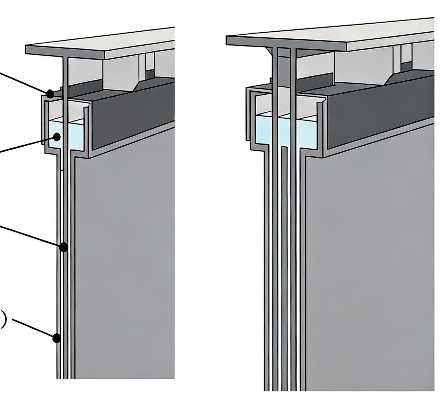
A steel plate moves within a thin box containing viscous material. Relative floor movement shears the material and dissipates energy, reducing the dynamic response of the structure.

Configuration & selection
Single-plate and double-plate forms
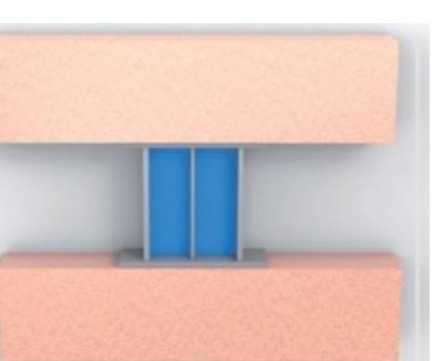
Floor-beam connections

For selection, send the design loads, movement requirements and connection drawings. Confirm the model, dimensions and interfaces against your project drawings.

Applications

Building frames where relative movement between adjacent floors can be used for energy dissipation.

Key features

  • An internal steel plate moves through viscous material inside a thin box.
  • Relative floor movement produces damping force.
  • Wall-form construction integrates the damping device into the structural bay.

Technical specifications

Single-plate and double-plate arrangements are illustrated. Coordinate installation space, interstory displacement and velocity, design damping force and beam connections.

Detailed technical information

Viscous damping walls

A viscous damping wall (VFW) is an energy-dissipating building component. A thin box-like wall is fixed to one floor beam, and an internal steel plate connected to the adjacent floor enters the box, which contains a highly viscous material. Relative floor movement drives the plate through the medium; viscous resistance dissipates seismic energy and reduces structural response.

The diagrams show single-plate and double-plate forms and an overall arrangement. Labels identify displacement direction, cover plate, viscous material, internal resistance plate, external container plates, and connections to the upper and lower beams. The performance plot shows force–displacement loops at 20 mm amplitude for 0.1, 0.5 and 1.0 Hz.